
Your security manager reviews the risk register on Monday. By Wednesday, a developer has changed a cloud access policy. By Friday, a revised security procedure has been uploaded, but the Statement of Applicability still lists the previous document.
Nothing obviously serious has happened. An ISO 27001 audit can turn those seemingly minor differences into significant problems. Startups often struggle less with any single task than with aligning responsibilities alongside daily operations.
When Spreadsheets Create More Work Than Expected
For many teams, spreadsheets offer a accessible and inexpensive way to organize information. However, spreadsheets can be accidentally overwritten without anyone noticing. A growing business may begin with individual files for security risks, policies, and assigned controls. That arrangement can work while the project has few moving parts, but problems appear when responsibilities shift or several employees make independent updates.
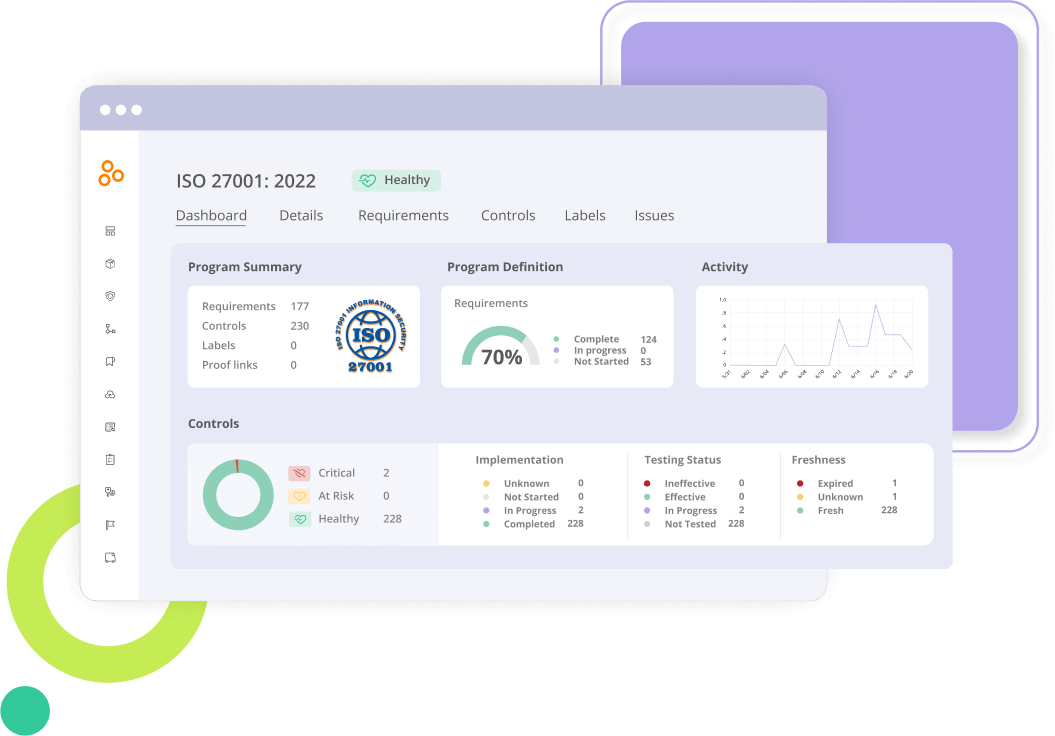
ISO 27001 compliance software can replace this fragmented process by bringing related activities into a structured workspace. Instead of opening several spreadsheets to understand a control’s status, team members can find its documentation and supporting evidence together.
Before You Subscribe, Consider Who Owns the Work
A new subscription only helps if someone maintains it, so ask first: Who will keep the system current?
A startup with eight employees probably has little reason to adopt the same compliance infrastructure as a multinational organization. Responsibility may be shared: founders review risks, developers manage technical controls, and operations staff coordinate records.
The right ISO 27001 software should clarify these responsibilities without adding complicated administrative tasks. Even a capable platform has limited value when the team finds it too difficult to update.
Why the Statement of Applicability Matters
A Statement of Applicability should be treated as an important record of control decisions. It explains which security controls an organization considers necessary, why those controls were selected, and whether they have been implemented.
Consider a business running its systems in the cloud: although the provider manages the facilities, the business still needs to evaluate relevant physical security risks.
Clear documentation should explain its security responsibilities. A connected risk register and Statement of Applicability can make those decisions more straightforward to demonstrate during an audit.
When the Audit Begins
An auditor may ask to examine records of access management, employee training evidence, security policies, or risk treatment decisions. Finding the latest approved documents becomes time-consuming when records are spread across several systems. ISO 27001 certification software helps organize these materials, but it does not guarantee that the evidence is sufficient or that certification will be granted.
An accredited certification body, not the software provider, determines the outcome of its certification assessment. Well-organized documentation can simplify the audit workflow.
How Smaller Teams Can Organize ISO 27001 Work
A growing team should compare compliance platforms against its budget, internal resources, and workload. For teams researching the best compliance software for startups ISO 27001 certification, CertAssist provides a structured approach. Its features include ISO 27001 clauses and Annex A controls, along with a risk register, Statement of Applicability, editable policy guidance, and evidence storage.
Auditors can be given direct access, and the platform does not require infrastructure integrations. That can be particularly useful for businesses that prefer managing evidence themselves.
Keep Compliance From Becoming a Bottleneck
Preparing for certification should not consume all the time needed to run the business. An effective compliance workspace helps teams track unfinished work, keep records current, and prepare for assessment.
CertAssist is designed around that principle: giving smaller teams the structure needed to manage ISO 27001 without building an unnecessarily complicated compliance operation. The real measure of success is not how many features a platform offers. The important question is whether the platform helps your team manage its security work as it grows.