
It’s not hard to process an individual bank account statement. Manual entry is manageable when only one PDF document is being processed.
Multiply this task by hundreds of businesses, many bank accounts and several statements.
The problem is now solved. The problem is changing. It’s not only about making it easier to convert bank statements for bookkeeping and accounting companies. It’s about establishing a procedure that can still work when demand for the service increases.
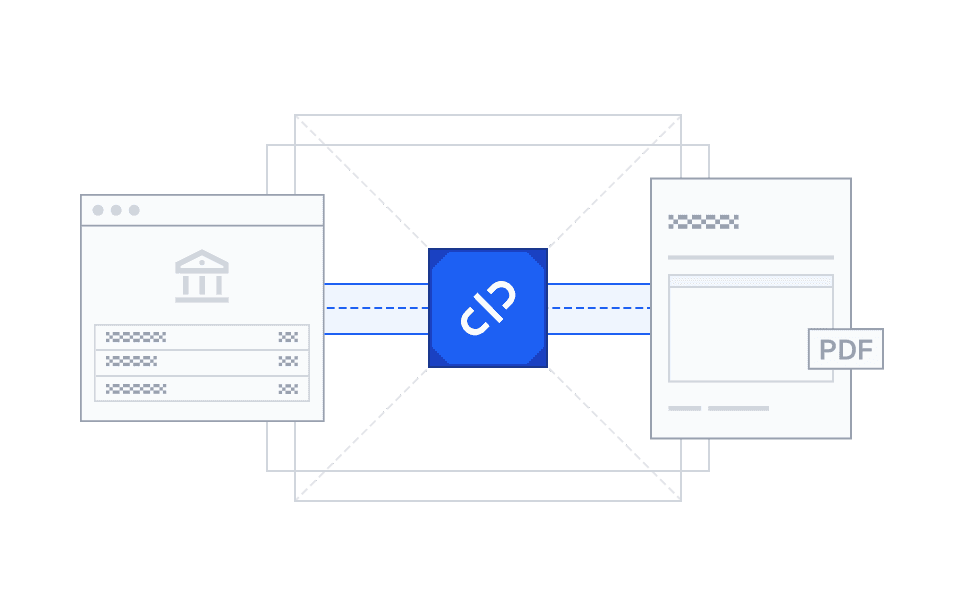
Image credit: docubrew.com
The problem is in repetition.
Imagine that an accounting firm receives monthly PDFs of several clients. One is Chase one, another Wells Fargo, while others provide statements from Bank of America, Capital One, Citi, or smaller companies.
Download each PDF file, then manually enter every transaction.
A bank statement converter can shift that workflow from transcription toward review. Docubrew takes transaction data from the actual statement rather than estimating the financial value creating structured files which can be inspected before being used. This distinction becomes more valuable as the volume of documents is increased.
Batch Processing Modifies Equation
For occasional conversions, it may be reasonable to separate the files. Accounting firms face different realities. Docubrew allows for multiple statements to be uploaded and processed in a single batch, resulting in individual results. Firms can then work through a collection of client records without manually rebuilding every transaction table.
If the accounting workflow calls for CSV files it is possible to convert the bank statement to CSV before proceeding.
Scanned paper statements also are not automatically excluded. Docubrew provides OCR for PDFs scanned. This can be helpful for clients who have both native PDFs as well as scans in their historical records.
Develop Outputs to Accounting Work Ahead
The process of conversion isn’t complete. The transactions typically need to go somewhere.
Docubrew can export CSV and Excel. QBO provides an output format for teams that require to transfer a bank statement to Quickbooks.
Firms that regularly convert bank statements to Quickbooks can build a more consistent process around receiving statements, processing them, checking the extracted data, and preparing the appropriate files for the accounting workflow.
Human oversight is essential. Automation could eliminate repetitive transcription, but bookkeepers remain responsible for checking financial information and doing the accounting task correctly.
The data from the clients is a Workflow-related Decision Itself
The handling of sensitive client data is related to higher volumes of documents.
Docubrew offers two ways for processing. The Windows desktop application handles conversions locally, allowing the files to remain on the firm’s computer. Docubrew states that the cloud option allows upload of documents encrypted and all uploaded and converted documents are deleted automatically within 24 hours.
Accounting practices may choose the approach that best fits their specific needs.
The Process can be scaled, not the repetitive work
A booming bookkeeping business should anticipate more financial records. This shouldn’t mean that it automatically allows more copy-and-paste.
The important question is whether the procedure that has worked for five clients can work for 50.
Standardizing the manner in which statements are received, evaluated and made available to accounting software will assist firms in developing a workflow designed to handle regular volumes, instead of considering each PDF as an individual manual project.